FortiManager Ordering Guide: An Overview
FortiManager streamlines security management‚ offering centralized control and automation for FortiGate firewalls and other Fortinet security devices.
This guide details the process of acquiring a FortiManager‚ covering licensing‚ hardware options‚ and support services to ensure a smooth deployment.
Understanding these aspects is crucial for optimizing your security infrastructure and maximizing the value of your Fortinet investment.
Understanding FortiManager Licensing
FortiManager licensing is a critical component‚ dictating the number of FortiGate devices it can manage and the features available. Licenses are typically subscription-based‚ offering flexibility and access to ongoing updates and support through FortiCare.

Key licensing considerations include the total number of managed devices‚ required feature sets (like advanced reporting or automation)‚ and the duration of the subscription. Fortinet offers various license tiers to accommodate different organizational needs‚ from small businesses to large enterprises.
It’s essential to accurately assess your current and future security infrastructure requirements to select the appropriate license. Understanding the distinction between base licenses and add-on features is also vital for cost-effective deployment. Proper licensing ensures full functionality and compliance with Fortinet’s terms of service.
FortiManager Hardware Models
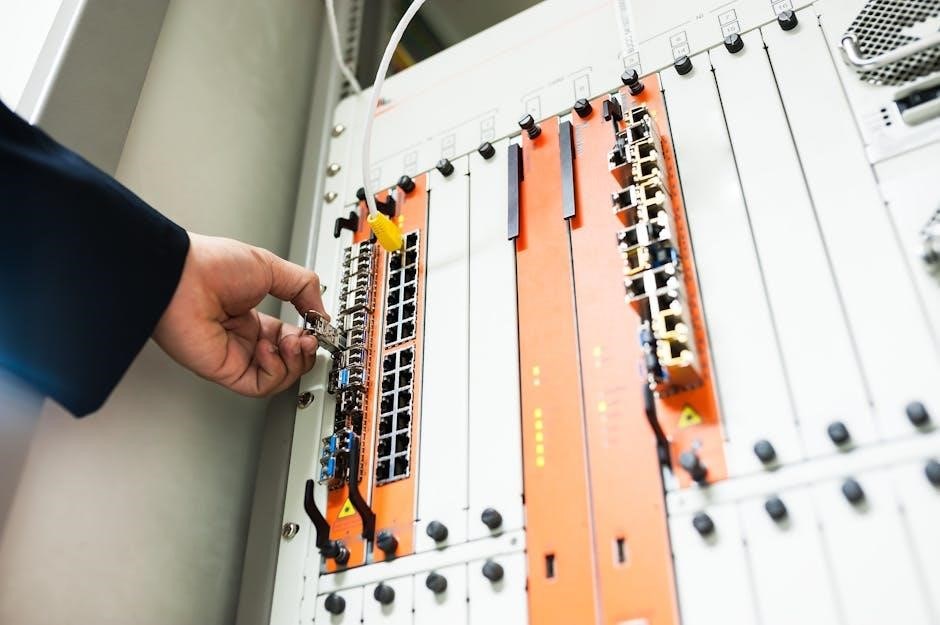
FortiManager is available in a range of hardware models designed to suit varying network sizes and management demands. These models‚ including the 100F‚ 200F‚ 400F‚ and 600F‚ differ in processing power‚ storage capacity‚ and maximum supported FortiGate devices.
The 100F is ideal for smaller deployments‚ while the 600F caters to large‚ complex networks requiring high performance and scalability. Selecting the appropriate model involves evaluating the number of managed devices‚ anticipated growth‚ and the need for advanced features like centralized logging and reporting.
Each model offers a balance of performance‚ features‚ and cost‚ allowing organizations to optimize their investment. Careful consideration of these factors ensures the chosen FortiManager hardware effectively supports the organization’s security management needs.

FortiManager Licensing Options
FortiManager licensing encompasses various options‚ including subscription-based models and FortiCare support‚ providing flexibility and comprehensive coverage for your security infrastructure.
FortiCare Support Services
FortiCare support services are integral to maximizing your FortiManager investment‚ offering a tiered approach to assistance and ensuring optimal performance and uptime. These services extend beyond basic hardware warranties‚ providing access to Fortinet’s expert technical support team.
Different FortiCare levels – typically Bronze‚ Silver‚ and Gold – offer varying response times for support requests‚ ranging from next business day to 24/7 priority access. Beyond troubleshooting‚ FortiCare includes firmware updates‚ access to the Fortinet knowledge base‚ and proactive monitoring capabilities.
Selecting the appropriate FortiCare package depends on your organization’s criticality of operations and internal IT support capabilities. Higher tiers often include dedicated account managers and enhanced reporting features‚ providing a more personalized and proactive support experience. Consider your network’s complexity and the potential impact of downtime when choosing a FortiCare level.
Subscription-Based Licensing
FortiManager increasingly utilizes subscription-based licensing‚ offering flexibility and aligning costs with actual usage. This model moves away from perpetual licenses‚ providing ongoing access to features and updates through annual or multi-year subscriptions.
Key subscription components include the FortiManager platform license itself‚ along with subscriptions for managed FortiGate devices. The number of FortiGate units you can manage is directly tied to your subscription level. Additional subscriptions may be required for advanced features like centralized logging and reporting.
Subscription licensing simplifies budgeting and ensures you always have the latest security capabilities. It also facilitates scalability‚ allowing you to easily add or remove managed devices as your network evolves. Carefully assess your current and projected FortiGate deployment to select the appropriate subscription tier.

FortiManager Hardware Specifications & Comparison
FortiManager hardware models vary in processing power‚ storage‚ and supported FortiGate counts‚ catering to diverse network sizes and security demands.
Choosing the right model ensures optimal performance and scalability.
FortiManager 100F
The FortiManager 100F is an excellent entry-level option designed for small to medium-sized businesses managing up to 50 FortiGate firewalls. It provides centralized management‚ automated provisioning‚ and comprehensive security policy control.
This model boasts a powerful Intel processor and ample memory‚ ensuring smooth operation even with a substantial number of managed devices. Key specifications include a compact form factor‚ making it suitable for space-constrained environments‚ and multiple network interfaces for flexible connectivity.

The 100F supports features like automated firmware updates‚ configuration backups‚ and real-time monitoring‚ simplifying security administration. It’s ideal for organizations seeking to streamline their security operations and enhance their overall security posture without significant investment.
Consider the 100F if your network requires basic centralized management and you anticipate moderate growth in the near future.
FortiManager 200F
The FortiManager 200F is a mid-range solution geared towards medium-sized businesses and distributed networks‚ capable of managing up to 200 FortiGate firewalls. It builds upon the 100F’s capabilities with increased processing power and storage capacity.
Featuring a more robust Intel processor and expanded memory‚ the 200F handles larger configurations and more complex security policies with ease. It offers advanced features like automated VPN management‚ application control‚ and intrusion prevention system (IPS) configuration.
This model is well-suited for organizations requiring granular control over their security infrastructure and needing to enforce consistent policies across multiple locations. Its enhanced performance ensures scalability and responsiveness‚ even during peak usage.
The 200F provides a solid foundation for growing businesses with evolving security needs.
FortiManager 400F
The FortiManager 400F represents a significant step up in management capacity‚ designed for larger enterprises and complex network environments. It supports up to 400 FortiGate firewalls‚ offering comprehensive control and automation.
Equipped with a powerful Intel Xeon processor and substantial memory‚ the 400F excels at handling extensive configurations‚ advanced security features‚ and high volumes of network traffic. It delivers enhanced performance for demanding deployments.
Key capabilities include advanced reporting‚ centralized log management‚ and automated threat response. This model is ideal for organizations needing detailed visibility into their security posture and rapid incident response capabilities.
The 400F provides a scalable and reliable platform for managing a large and dynamic security infrastructure.
FortiManager 600F
The FortiManager 600F is a high-performance appliance tailored for large and highly complex network environments‚ supporting up to 800 FortiGate firewalls. It’s built around robust Intel Xeon processors and ample memory resources‚ ensuring exceptional speed and reliability.
This model excels in deployments requiring extensive automation‚ granular policy control‚ and advanced threat intelligence integration. It provides superior scalability and performance for managing a substantial security infrastructure.

Key features include advanced analytics‚ comprehensive reporting‚ and centralized orchestration capabilities. The 600F is designed for organizations demanding maximum visibility‚ control‚ and responsiveness to evolving security threats.
It’s a powerful solution for enterprises with stringent security requirements and a need for centralized management.

Ordering Process & Channels
FortiManager procurement typically occurs through authorized Fortinet partners‚ offering expert guidance and support. Direct ordering may be available in select regions.
Contacting a partner ensures a streamlined experience.
Working with Fortinet Partners
Fortinet partners are crucial for a successful FortiManager deployment‚ offering specialized expertise and tailored solutions. These partners possess in-depth knowledge of Fortinet’s product ecosystem and can assist in accurately assessing your network requirements.
They’ll help determine the appropriate FortiManager model and licensing based on your organization’s size‚ complexity‚ and security needs. Partners can also provide valuable pre-sales consultation‚ assisting with system design and integration planning.
Furthermore‚ they offer post-sales support‚ including installation‚ configuration‚ and ongoing maintenance. Leveraging a partner ensures access to local support‚ faster response times‚ and potentially bundled services like training and professional services. To locate an authorized Fortinet partner‚ utilize the Fortinet Partner Locator tool on their official website.
Direct Ordering (If Applicable)
While Fortinet primarily encourages procurement through its established partner network‚ direct ordering options may be available under specific circumstances‚ typically for larger enterprise accounts or government entities. Direct ordering streamlines the process‚ eliminating intermediary steps and potentially offering customized procurement agreements.
However‚ it’s crucial to verify eligibility for direct purchase through a Fortinet sales representative. Direct orders often require a formal quote and adherence to Fortinet’s direct sales policies.
Even with direct ordering‚ Fortinet strongly recommends leveraging their professional services for implementation and support. This ensures proper configuration‚ optimal performance‚ and access to Fortinet’s expert knowledge base. Contact Fortinet sales to explore direct ordering possibilities and associated requirements.

Key Considerations Before Ordering
FortiManager selection requires careful planning; assess your FortiGate compatibility‚ current network size‚ and future growth to ensure optimal performance and scalability.
FortiGate Compatibility
FortiManager’s compatibility with your existing FortiGate firewall models is a primary consideration before purchase. Ensure the FortiManager version supports the FortiOS versions running on your firewalls for seamless integration and management.
Older FortiGate models might have limited support on newer FortiManager versions‚ potentially restricting access to the latest features and functionalities. Conversely‚ using an outdated FortiManager with newer FortiGates could lead to performance issues or incomplete configuration options.
Consult the Fortinet documentation and compatibility matrix to verify support for your specific FortiGate and FortiOS versions. Proper compatibility guarantees efficient policy deployment‚ centralized logging‚ and overall streamlined security administration across your network infrastructure.
Network Size & Complexity
Determining the appropriate FortiManager model hinges on your network’s size and complexity. A small network with a limited number of FortiGate devices can often be managed effectively by a lower-end FortiManager appliance‚ like the 100F or 200F.
However‚ larger and more complex networks‚ featuring numerous FortiGate firewalls‚ VPNs‚ and intricate security policies‚ necessitate a more powerful FortiManager‚ such as the 400F or 600F. Consider the number of devices‚ the frequency of configuration changes‚ and the need for advanced features like automation and centralized logging.
Accurately assessing these factors ensures optimal performance and scalability‚ preventing bottlenecks and maintaining efficient security management as your network evolves.

Post-Ordering: Activation & Support
FortiManager activation involves registering the device via FortiCloud or directly through the Fortinet Support portal‚ ensuring access to updates and support.
FortiCloud Activation
FortiCloud activation offers a streamlined process for registering your FortiManager‚ providing immediate access to essential services and support resources. Begin by logging into your FortiCloud account; if you don’t have one‚ create one through the Fortinet website.
Navigate to the device management section and select “Add Device.” Input the FortiManager’s serial number‚ which can be found on the device itself or the packaging. FortiCloud will then verify the device and link it to your account.
This activation unlocks firmware updates‚ technical support‚ and access to the Fortinet knowledge base. Ensure your FortiCloud account details are accurate to avoid any activation issues. Proper activation is vital for maintaining optimal performance and security.
FortiManager Registration
FortiManager registration is a critical step post-ordering‚ ensuring access to full functionality and support benefits. This process officially links your hardware to your Fortinet account‚ enabling firmware updates‚ technical assistance‚ and warranty coverage.
Registration is typically completed through the Fortinet Support portal‚ requiring the device’s serial number and proof of purchase. Accurate information is essential for a successful registration. Once registered‚ you’ll gain access to the Fortinet knowledge base and community forums.
Timely registration activates your FortiCare subscription‚ if purchased‚ providing proactive support and threat intelligence updates. Keep your registration details current to maintain uninterrupted access to these valuable resources.

Frequently Asked Questions (FAQ)
FortiManager ordering often raises questions about licensing transfers‚ compatibility‚ and support options; this section addresses common inquiries for clarity and guidance.
Licensing Transfer Policies
Fortinet licensing for FortiManager is generally tied to the specific unit and cannot be freely transferred between different hardware models or serial numbers without explicit authorization.
Transfers are typically permitted in scenarios involving hardware failure‚ where a replacement unit requires the existing license‚ or during formal company mergers and acquisitions‚ subject to verification.
Requests for license transfers must be submitted through the official Fortinet Support portal‚ providing detailed justification and documentation to support the claim.
Unapproved license transfers are a violation of the end-user license agreement and may result in service disruption or legal consequences.
FortiCare support contracts are also generally non-transferable‚ aligning with the hardware license. Always consult the official Fortinet documentation or contact support for specific transfer guidelines.