Suzuki Violin Book 1 Piano Accompaniment PDF: A Comprehensive Guide
Navigating the world of Suzuki violin learning often requires readily available piano accompaniments, frequently sought in PDF format. This guide explores resources
for finding these essential materials, covering various pieces and offering insights into PPM (Parts Per Minute) considerations for effective practice and performance.
Understanding the Suzuki Violin Method
The Suzuki method, founded by Shinichi Suzuki, is a renowned music education approach emphasizing learning by ear, similar to how children acquire language. It’s built on the principle that musical ability isn’t an innate gift, but can be developed through consistent exposure and a nurturing environment. Central to this method is the crucial role of the piano accompaniment, providing a harmonic foundation and rhythmic stability for the young violinist.
Suzuki Book 1 serves as the foundational material, introducing fundamental techniques and a carefully sequenced repertoire. The piano part isn’t merely supportive; it actively shapes the student’s musical understanding. It establishes correct intonation, phrasing, and a sense of ensemble playing from the very beginning. Finding reliable piano accompaniment PDFs is therefore vital for students and teachers alike, enabling effective practice outside of lessons and fostering a deeper connection to the music. The method prioritizes a positive learning experience, and accurate accompaniment contributes significantly to this goal.
The Importance of Piano Accompaniment
Piano accompaniment is absolutely fundamental to successful Suzuki violin learning, particularly at the Book 1 level. It provides a consistent tonal center, helping students develop accurate intonation – a cornerstone of the Suzuki approach. Beyond intonation, the piano part models musicality, phrasing, and rhythmic precision, elements that students internalize through repeated listening and playing alongside the accompaniment.
Practicing with a skilled pianist is ideal, but often impractical. High-quality piano accompaniment PDFs offer a valuable alternative, allowing students to practice independently and reinforce their learning. These PDFs ensure access to the correct harmonies and rhythms, preventing the development of incorrect habits. Furthermore, the accompaniment fosters a sense of ensemble playing, even during solo practice, preparing students for future collaborative musical experiences. The availability of these resources is therefore crucial for maximizing the benefits of the Suzuki method.
Availability of Suzuki Violin Book 1 Piano Accompaniment PDFs
Finding Suzuki Violin Book 1 piano accompaniment PDFs requires diligent searching, as official, centrally-located resources are limited. Numerous websites and online forums host these files, often shared by teachers and students. Platforms like Mega.nz are frequently cited as hosting locations for individual pieces, such as “Long, Long Ago” and variations of “Allegretto” at different PPMs (60, 80, 95, and 100).
However, caution is advised regarding copyright and legality (discussed later). Alfred Music, the publisher of the Suzuki Violin School, offers piano accompaniments for sale, sometimes in revised editions. Free PDFs are often circulated, but their origin and legality can be questionable. Dedicated Suzuki resources and teacher networks are excellent places to inquire about reliable sources and ensure compliance with copyright regulations. Availability fluctuates, necessitating a proactive search.
Specific Pieces with Available Accompaniment
Several pieces from Suzuki Violin Book 1 consistently have piano accompaniment PDFs available online. “May Song” (PPM 60) is frequently found, alongside multiple versions of “Allegretto” – at both PPM 80 and PPM 60. “Minuet 2” (PPM 95) also enjoys relatively widespread availability. “Long, Long Ago” (PPM 100) is another commonly sought-after accompaniment, often shared as a downloadable file.

Notably, “Perpetual Motion in A Major” typically only has accompaniment for the theme itself, without repetitions. Spanish translations are also present, indicated by “Suzuki Violín Libro 1” alongside the piece name. These resources are often shared via file-hosting services, requiring users to verify download links and file integrity. The presence of these accompaniments significantly aids student practice and development.
May Song ⸺ Piano Accompaniment (PPM 60)
The “May Song” piano accompaniment, played at 60 Parts Per Minute (PPM), is one of the most readily accessible resources for Suzuki Violin Book 1 students. Numerous online sources offer downloadable PDF versions, catering to both English and Spanish-speaking musicians – often labeled as “Suzuki Violín Libro 1 Acompañamiento Piano PPM 60”.
This piece serves as an excellent starting point for developing ensemble skills, allowing violinists to practice with a consistent tempo. The 60 PPM speed is ideal for beginners, fostering accurate intonation and rhythmic precision. Availability is widespread, making it a convenient choice for teachers and students alike. Finding a reliable download source is key to ensuring a clean, playable accompaniment track.

Allegretto ― Piano Accompaniment (PPM 80 & 60)
The “Allegretto” from Suzuki Violin Book 1 presents options for piano accompaniment at both 80 and 60 Parts Per Minute (PPM). This flexibility is beneficial for students progressing at different paces. Like “May Song”, resources are available in both English and Spanish (“Suzuki Violín Libro 1 Acompañamiento Piano PPM 80/60”).
The 80 PPM version challenges students ready for a slightly faster tempo, encouraging them to maintain clarity and control. Conversely, the 60 PPM track provides a slower, more manageable practice speed. Downloads are frequently found online, though verifying the source’s reliability is crucial. Both versions are valuable tools for developing rhythmic stability and musical expression, offering tailored support for varying skill levels.
Minuet 2 ― Piano Accompaniment (PPM 95)
The “Minuet 2” piece, a staple in Suzuki Violin Book 1, benefits greatly from piano accompaniment set at 95 Parts Per Minute (PPM). Similar to other pieces, Spanish-language accompaniment options exist (“Suzuki Violín Libro 1 Minueto 2 Acompañamiento Piano PPM 95”), broadening accessibility for diverse learners. Finding a reliable download source is key.
This tempo encourages students to refine their bowing technique and intonation within a moderately paced, graceful context. The accompaniment provides a solid harmonic foundation, allowing the violinist to focus on musicality and phrasing. Practicing with the PPM 95 track helps build confidence and prepares students for performance. Consistent practice with the accompaniment fosters a strong sense of rhythm and ensemble playing.
Long, Long Ago ⸺ Piano Accompaniment (PPM 100)
“Long, Long Ago”, a beloved piece within the Suzuki Violin Book 1 repertoire, is beautifully enhanced by piano accompaniment, ideally played at 100 Parts Per Minute (PPM). Download links for this accompaniment are available, sometimes labeled with “DOWNLOAD / DESCARGA” indicating Spanish-language resources as well. Accessing these PDFs streamlines practice for students.
The slower tempo of 100 PPM allows for expressive phrasing and careful attention to tone quality. The piano accompaniment provides a warm and supportive harmonic backdrop, encouraging lyrical playing. Students can focus on developing a beautiful sound and connecting with the emotional content of the melody. Consistent practice with the PPM 100 track builds musicality and prepares the violinist for a polished performance of this classic piece.
Perpetual Motion in A Major ― Piano Accompaniment (Theme Only)
For Suzuki Violin Book 1’s “Perpetual Motion in A Major”, piano accompaniment resources often focus solely on the theme – meaning the repetition sections are typically not included in the readily available PDF accompaniments. Download links exist, though some may indicate a “Link not generated,” suggesting intermittent availability of this specific resource. This focus on the theme allows students to concentrate on mastering the initial melodic statement.
Practicing with the theme-only accompaniment encourages independent repetition and rhythmic accuracy. Violinists can build stamina and precision by internalizing the pattern and executing it consistently. The piano provides a clear harmonic foundation, supporting the violinist’s development of a strong, even tone. This approach fosters self-reliance and prepares students for performing the complete piece with confidence and musicality.
Finding and Downloading Accompaniment Tracks
Locating Suzuki Violin Book 1 piano accompaniment PDFs often involves searching online repositories and music-specific websites. Resources like Mega.nz are frequently cited, hosting downloadable files for pieces such as “Long, Long Ago” (PPM 100). However, availability can be inconsistent; some links may be broken or require account creation. It’s crucial to verify the source’s legitimacy before downloading to avoid potential security risks.
Furthermore, searching for specific piece titles alongside “piano accompaniment” and “PPM” (e.g., “Suzuki Violin Allegretto Piano Accompaniment PPM 80”) yields targeted results. Online forums dedicated to Suzuki violinists are also valuable, as members often share links and resources. Remember to respect copyright regulations when accessing and utilizing these materials, ensuring compliance with licensing terms.
Legal Considerations and Copyright
Accessing and utilizing Suzuki Violin Book 1 piano accompaniment PDFs necessitates careful consideration of copyright laws. These accompaniments are typically protected intellectual property, owned by the publishers of the Suzuki Violin School materials, such as Alfred Music. Downloading or distributing copyrighted material without proper authorization constitutes infringement.
Legitimate acquisition often involves purchasing official accompaniment books or subscribing to services offering licensed access. While some free PDFs circulate online, their legality is questionable; Using unauthorized copies carries potential legal risks and undermines the creators’ rights. Supporting the official channels ensures continued availability and quality of these valuable resources for violin students and educators alike. Respecting copyright fosters a sustainable ecosystem for musical education.
Alternative Sources for Accompaniment Materials
Beyond official publications, several alternative avenues exist for sourcing Suzuki Violin Book 1 piano accompaniments. Online music communities and forums dedicated to violin education frequently host shared resources, though verifying legality remains crucial. Some websites specialize in providing accompaniment tracks, often requiring a subscription or one-time purchase.
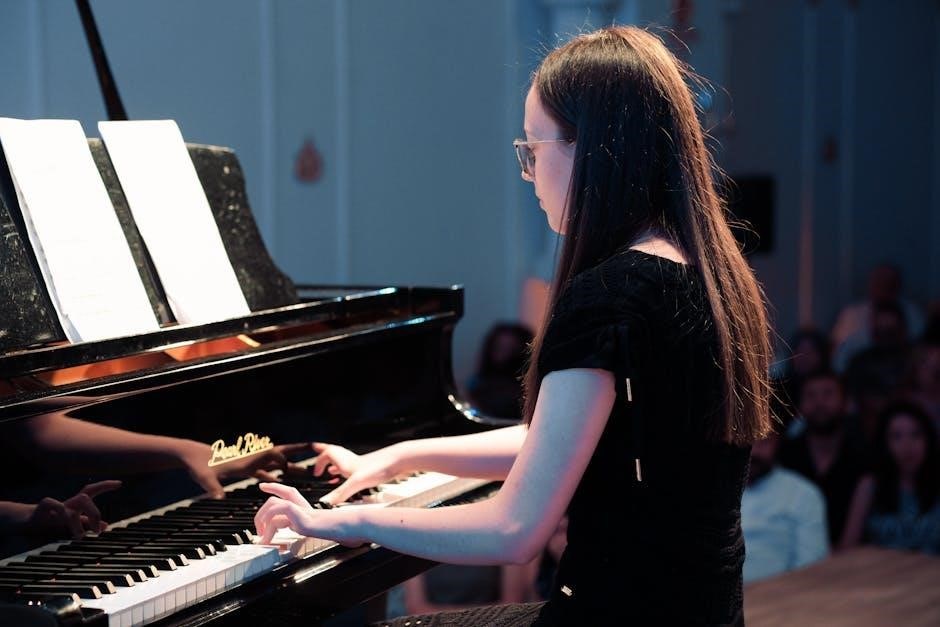
Additionally, individual piano teachers or advanced violinists may offer custom-recorded accompaniments. Exploring YouTube channels dedicated to Suzuki violin can sometimes yield free accompaniment tracks, but quality and accuracy can vary. Websites offering sheet music downloads may also include piano accompaniment versions. Always prioritize legally obtained materials to support composers and publishers, ensuring continued access to quality resources for all learners.

Suzuki Violin School Piano Accompaniments ⸺ Volume 1 (Revised)
Alfred Publishing offers the “Suzuki Violin School Piano Accompaniments ⸺ Volume 1 (Revised)” as a dedicated resource. This publication provides officially sanctioned piano parts for all pieces within the first book of the Suzuki violin repertoire. It’s frequently available through major music retailers, both online and in physical stores, and represents a reliable source for accurate accompaniments.
The revised edition often incorporates corrections and improvements based on feedback from Suzuki teachers and performers. Purchasing this volume ensures access to professionally prepared accompaniments aligned with the Suzuki method’s pedagogical approach. It’s often found alongside ensemble arrangements, offering additional performance opportunities. This is a key resource for students and teachers seeking a comprehensive and authorized accompaniment collection.
The Role of PPM (Parts Per Minute) in Accompaniment
PPM, or Parts Per Minute, is a crucial element when utilizing Suzuki violin accompaniments, particularly in PDF form for practice. Different arrangements and sources often specify a PPM tempo, guiding the pianist’s speed. For instance, “May Song” is commonly played at PPM 60, while “Allegretto” appears at both 80 and 60, offering varied practice speeds. “Minuet 2” typically uses PPM 95, and “Long, Long Ago” is often set to PPM 100.
Understanding PPM allows violinists to gradually increase tempo as their proficiency grows. Starting at a slower PPM builds accuracy and intonation, while progressing to higher PPMs develops speed and fluency. Accompaniment PDFs frequently indicate the intended PPM, ensuring synchronized practice. Utilizing the correct PPM is vital for mirroring the Suzuki method’s gradual progression and achieving a polished performance.
Using Accompaniment for Practice and Performance
Suzuki violin accompaniment PDFs are invaluable tools for both practice and performance. During practice, they provide a consistent tempo and harmonic foundation, aiding intonation and rhythm. Students can play with the accompaniment, focusing on blending and musicality, or practice sections independently, then integrate them with the piano track. Utilizing the correct PPM (Parts Per Minute), as indicated in the PDF, is crucial for effective progression.
For performances, the accompaniment offers a professional and polished sound. Familiarity with the PDF’s arrangement ensures a seamless collaboration between violinist and pianist. Access to these resources, like those for “May Song” or “Allegretto”, allows students to experience the joy of ensemble playing and build confidence. Consistent practice with the accompaniment translates to a more refined and expressive performance.
Notion as a Tool for Organizing Suzuki Materials
Managing Suzuki violin resources, including numerous piano accompaniment PDFs, can become complex. Notion emerges as a powerful solution, offering a centralized workspace for all learning materials. Users can create dedicated pages for each piece – “May Song”, “Allegretto”, etc. – embedding the PDF directly within Notion. This eliminates scattered files and ensures easy access.

Notion’s database features allow for tagging by PPM, book number, or difficulty level, facilitating quick searches. Furthermore, it’s ideal for linking practice logs, performance notes, and even recordings alongside the accompaniment PDF. The AI capabilities within Notion can assist in summarizing key practice points or generating personalized learning schedules. It’s a hub for streamlined Suzuki violin study.
Notion Desktop App Features for Musicians
The Notion desktop app provides a focused environment for musicians working with Suzuki violin materials, including piano accompaniment PDFs. Its clean, distraction-free interface minimizes tab overload, allowing for concentrated practice sessions. Smooth and quick tab switching enhances workflow when referencing multiple resources – sheet music, recordings, and practice notes – alongside the PDF accompaniments.
Musicians benefit from the app’s robust offline access, ensuring uninterrupted study even without an internet connection. The desktop version’s enhanced performance handles large PDF files efficiently. Command search functionality quickly locates specific pieces or practice logs. Notion’s block-based architecture allows musicians to customize their workspace, tailoring it to their unique learning style and the demands of the Suzuki method.
Customization Options within Notion

Notion’s block-based architecture empowers musicians to build a personalized Suzuki violin learning hub, perfectly suited for managing piano accompaniment PDFs. Users can create dedicated databases for pieces, categorizing them by book, composer, or difficulty. Each piece can link directly to its corresponding PDF accompaniment, streamlining access during practice.
Customizable views – table, board, calendar – offer diverse ways to visualize practice schedules and track progress. Musicians can embed audio recordings alongside the PDFs for comparative listening. Utilizing toggles allows for hiding or revealing practice notes, fingerings, or bowings directly within the page. Color-coding and tagging further enhance organization, enabling quick identification of pieces needing attention. Notion’s flexibility adapts to individual learning preferences, fostering a more effective and enjoyable practice experience.
Benefits of Using a Dedicated Workspace like Notion
Employing a centralized workspace like Notion for Suzuki violin study, particularly when managing piano accompaniment PDFs, offers significant advantages. It eliminates scattered files and disparate notes, creating a unified system for all learning materials. Having all resources – PDFs, practice logs, performance recordings – in one location boosts efficiency and reduces frustration.
Notion’s collaborative features allow for seamless sharing with teachers and fellow students, facilitating feedback and ensemble practice. The ability to embed various media types enhances learning, while its task management tools promote structured practice routines. A dedicated workspace minimizes distractions, fostering focused study sessions. Ultimately, Notion transforms the often-fragmented process of learning the Suzuki violin into a cohesive and organized experience, maximizing learning potential.
Downloading the Notion Desktop App
To enhance your Suzuki violin accompaniment PDF organization, leveraging Notion’s desktop application is highly recommended. It provides a clean, distraction-free interface, unlike browser-based versions often filled with tempting tabs. Accessing the desktop app streamlines workflow, offering smoother and quicker navigation between your Suzuki materials – sheet music, practice schedules, and crucially, those piano accompaniment PDFs.
Downloading is straightforward: visit the official Notion website and locate the downloads section. Choose the appropriate version for your operating system (Mac or Windows). The installation process is simple and quick. Once installed, the desktop app seamlessly syncs with your existing Notion workspace, ensuring all your data is readily available offline. Enjoy an infinitely flexible and adaptable workspace optimized for focused musical study.
Resources and Further Information
For continued exploration of Suzuki violin accompaniment PDFs, several online communities and forums dedicated to the Suzuki method can prove invaluable. These platforms often host shared resources, including links to downloadable accompaniments and discussions regarding optimal practice techniques. Websites specializing in sheet music and piano accompaniments may also offer relevant materials, though copyright considerations are paramount – always ensure legal access.
Furthermore, exploring resources like Mega.nz (as referenced in recent searches) can yield results, but exercise caution and verify file integrity. Alfred Music, the publisher of the Suzuki Violin School, is a primary source for official accompaniments. Notion’s own help center provides extensive documentation on utilizing its features for organizing musical materials, enhancing your workflow with Suzuki violin PDFs and related resources. Remember to prioritize legal and ethical sourcing of all materials.